Reading a Dress Code on a Wedding Invitation
Reading a dress code on a wedding invitation is easier when you separate stated rules, formality cues and personal choices before choosing an outfit.
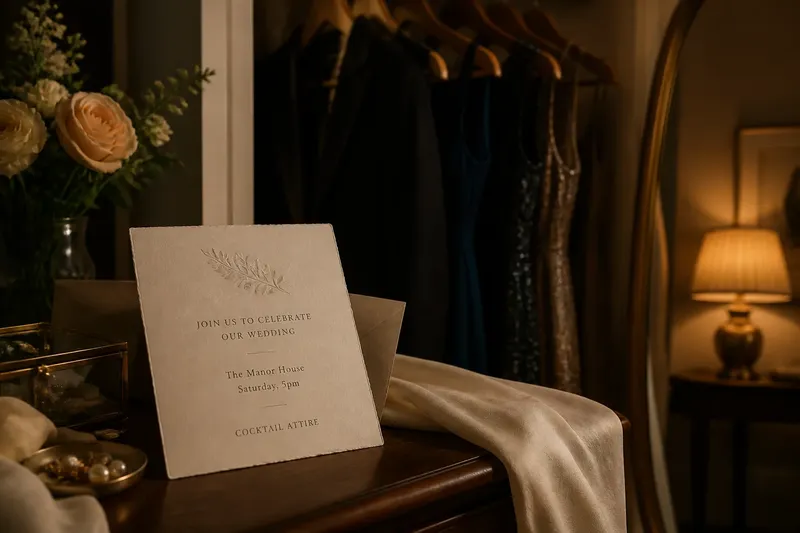
You open a wedding invitation beside your wardrobe and find two words under the venue details: “cocktail attire”. Reading a dress code on a wedding invitation is less about decoding a secret uniform than deciding which parts are explicit, which are clues and which are yours to choose.
That distinction matters because an invitation rarely tells every guest exactly what to wear. The phrase may set a broad level of formality, while the venue, time and wording around it supply context. Your own comfort and the clothes you already own complete the picture.
Start with what the invitation actually says
Look for a named dress code, any direct clothing request, and practical details such as an outdoor ceremony or a religious service. Treat a clear instruction differently from a general suggestion. “Black tie” names a recognised level of formality; “garden party” suggests an atmosphere, but leaves more room for interpretation.
Also check the wedding website or details card. An invitation may direct guests there for dress guidance, especially if the day includes several locations or a change of clothing. If the wording is unclear, a brief, polite question to the couple or a member of the wedding party is more useful than asking a group chat to settle etiquette by committee.
Separate requests from conventions. A note asking guests to avoid a particular colour, wear a certain shade or bring suitable footwear is a specific request. General assumptions about what a colour or garment “always” means are less dependable, since customs vary by family, region and couple.
Use the setting to read the level of formality
When no dress code is given, combine the practical clues rather than letting one detail decide everything. A grand hotel ballroom and an evening start point towards more formal clothing than a daytime ceremony in a village hall. A beach or garden setting makes sensible shoes relevant; it does not automatically mean that every guest should arrive in holiday clothes.
Consider the event as a whole. The ceremony may be formal while the reception is relaxed, or guests may move between a place of worship, a town venue and an outdoor space. The invitation’s schedule can tell you whether one outfit needs to work across all of them. If there is a long walk over grass or gravel, a shoe that remains comfortable on that surface is a more useful choice than a delicate heel chosen for appearance alone.
Imagine you are invited to a late-afternoon wedding at a country house, with a ceremony in a chapel and drinks on the lawn, but no dress code. You might choose a suit or a polished dress with a light layer, then wear shoes that can manage both indoor floors and grass. The expected result is an outfit that looks considered in the chapel without becoming awkward when the guests move outside.
Choose by the wording you have been given
These are common readings, not universal laws. If the couple gives a more specific direction, follow that instead of relying on a general convention.
- White tie: This signals the most formal traditional dress. Guests generally choose full evening dress appropriate to the invitation and their own wardrobe, rather than treating it as a chance to reinterpret the code casually.
- Black tie: This points to formal evening wear. A tuxedo or an appropriately formal evening outfit is a closer fit than a business suit or daytime dress. If the invitation says “black-tie optional”, formal clothing remains the clearest choice, while a dark suit or similarly polished alternative may also suit the event.
- Cocktail attire: This usually calls for dressy, party-appropriate clothing, less formal than black tie but more polished than ordinary workwear. A tailored suit, a refined dress or separates with a clear evening feel can all work.
- Formal or black tie preferred: Read the full phrase. “Formal” allows some latitude; “black tie preferred” indicates that the hosts would like a more formal standard, while the wording acknowledges that guests may not have the exact outfit.
- Smart casual or dressy casual: These phrases vary widely. Aim for neat, intentional clothing rather than office basics or weekend wear. Tailored trousers, a well-kept shirt or blouse, and clean, considered shoes provide a sensible starting point.
- Casual: This relaxes the formality, not the fact that it is a wedding. Choose tidy clothing suited to the venue and occasion; avoid assuming that casual means gym wear, beachwear or anything you happen to be wearing already.
- Festive, colourful or themed: These describe a mood or visual request rather than a standard formality level. Honour the direction in a way that still feels comfortable, and look for any separate note about colours or specific items.
Let your own choices fill the remaining space
Once you know the stated expectation and the likely formality, decide what works for you. Think about movement, temperature, fit, cultural or religious practice, and whether you will be sitting, standing or travelling between places. An outfit that meets the occasion but needs constant adjustment is not especially useful.
You do not need to buy a new outfit simply because the invitation uses a formal phrase. A suit can often be made more or less dressy through its shirt, tie, shoes and accessories. A dress or separates can shift in formality through fabric, shape, layering and footwear. Keep the choices coherent rather than trying to signal every possible interpretation at once.
Colour is a personal choice unless the hosts have made a request. If you are uncertain about a colour that may carry particular meaning in the couple’s community, ask someone close to the wedding rather than relying on a supposed universal rule. The same applies to dress that may need to respect a ceremony’s expectations: checking ahead is simpler than guessing.
What is not worth the effort is trying to infer a strict rule from a single photograph of the venue or from what guests wore at a different wedding. Those details can offer clues, but they do not replace the invitation’s wording or the couple’s own preferences.
What should you do when the invitation is unclear?
What if there is no dress code?
Use the venue, time of day and schedule as combined clues, then choose a level of polish that fits the occasion. If an unusual setting or ceremony makes the choice uncertain, ask the couple or wedding party a concise question.
Can you wear black to a wedding?
Black can be appropriate for many weddings, particularly for evening events, but expectations differ among families and communities. Check for a colour request or local custom if you have reason to think it matters.
Can you wear a patterned or colourful outfit?
Usually, a pattern or a strong colour can fit if it suits the stated code and does not conflict with a request from the couple. For a theme, you can echo its palette or mood without turning yourself into part of the decorations.
Should you ask the couple what to wear?
Ask if the wording leaves a practical question that could change your choice, such as whether the ceremony is outdoors or whether a particular level of formality is expected. Keep the question brief and avoid asking the couple to approve every item in your outfit.
Make the decision without turning it into a uniform
A useful reading of a wedding dress code begins with the actual words, adds the event’s setting, then leaves personal decisions where they belong. Reading a dress code on a wedding invitation this way gives you a clear direction without pretending that every guest, venue or family follows the same rules.
Before the day, check that the outfit suits the full schedule and that its practical details are settled: a layer for a cool evening, shoes for the ground underfoot, or clothing that works for the ceremony as well as the reception. The invitation sets the terms of the occasion. Your judgement supplies the rest.