How Linen, Cotton and Wool Feel in Clothes
Compare linen, cotton and wool by feel, drape and care to choose clothes that suit your preferred texture, movement and laundry routine.
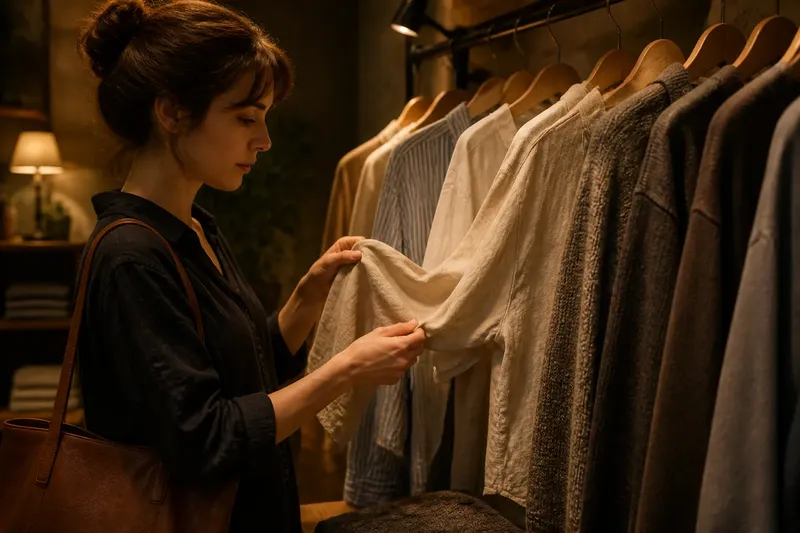
At a shop rail, linen, cotton and wool can look similar until you lift a sleeve or rub the cloth between your fingers. Linen, cotton and wool feel different because their fibres and yarns behave differently, but the label cannot tell you exactly how a finished garment will hang. Start with the sensation you want, then consider the cloth, cut and care instructions together.
Begin with the feel against your skin
Touch the fabric with the back of your hand, then press it lightly between your fingers. Notice whether it feels cool or warm, smooth or textured, springy or firm. If you are shopping online, inspect close-up photographs and read the fibre content; a broad product description such as “soft” says little about the surface.
Linen often feels dry, cool and slightly crisp. Its surface may have small irregularities, particularly in a more open weave. Some linen softens with wear and laundering, but softness is not its only useful quality: a crisp linen shirt can feel airy while holding a distinct shape. If you dislike visible texture or creases, that character may irritate rather than charm.
Cotton covers many sensations. A smooth poplin shirt may feel cool and neat; brushed cotton can feel soft and warm; denim feels substantial and firm. “Cotton” names a fibre, not a single finish or weight. Check the actual fabric rather than assuming every cotton garment will feel like a familiar T-shirt.
Wool can feel springy, warm and softly textured, though its surface varies considerably. Fine wool fabrics may feel smooth against the hand, while coarser yarns can feel prickly to some wearers. The label cannot tell you whether a garment will irritate your neck or wrists. If you are sensitive, check the contact points and any lining, collar or cuff that sits against your skin.
Check how the cloth moves and falls
Hold a garment by its shoulder or waistband and watch how the fabric settles. Let a sleeve or hem hang freely. Fluid cloth falls into soft folds; firmer cloth keeps more of its outline. This is more useful than ranking fibres as inherently drapey or stiff, because yarn, weave, finish and construction all affect the result.
Linen commonly has a relaxed, slightly architectural fall. It can look airy without clinging, while heavier linen may hold a clean line rather than float. Its creasing is part of its appearance. On a loose shirt or wide-legged trousers, those folds can read as ease; on a sharply pressed design, they may seem out of place before the day is half done.
Cotton can be crisp, fluid or dense. Poplin tends to keep a tidy outline, while cotton voile is light and soft. Twill and denim have more body, and jersey stretches and follows the body more closely. When comparing garments, ask whether the cloth swings, gathers, stretches or stands away from you. Those behaviours matter more than the fibre name alone.
Wool often has a natural spring that helps cloth recover its shape after handling. Lightweight wool can drape smoothly; a thicker knit or woven cloth may feel rounded and substantial. A wool skirt can hang in a flowing line, while dense jacket fabric may keep a defined silhouette. Look at the garment in motion if possible, rather than judging it only on a hanger.
Match the fibre to the sensation you prefer
Choose by the qualities you actually notice, not by a general reputation. If you like a cool, textured shirt, linen may suit you. If you want options in smooth, soft and sturdy fabrics, cotton offers plenty of distinct finishes. If warmth and a springy surface appeal, consider wool.
Say you are choosing a shirt for a warm day, dislike cling and have two garments in front of you: crisp cotton poplin and loose linen. You pinch each cloth and let the sleeves hang. The poplin looks neater and smoother; the linen feels more textured and falls away from the body. If its creases suit the look you want, the linen may fit your preferences; if a polished surface matters more, choose the cotton. The decision turns on the finish and shape, not a fibre ranking.
For a knit, check the inside of the cuff and neck as well as the front. A wool jumper may feel springy across the chest but scratchy at the throat. A cotton knit may feel smoother yet less warm to the touch. A blend can change both sensations, so read the full fibre list instead of treating the first fibre named as the whole story.
Read care needs before you commit
Care depends on the finished garment as much as its fibre. Dyes, finishes, linings and construction can affect suitable washing. Follow the care label and manufacturer instructions; if they conflict with a general rule of thumb, use the garment-specific advice.
Linen often creases readily and may soften with washing. Some pieces can be laundered at home, while others need more careful handling because of their shape or finish. Consider whether you are content to wear a relaxed, rumpled surface or prefer to press it. There is little point buying linen for its airy feel and treating every crease as a personal failure.
Cotton is often straightforward to care for, but it can shrink, fade or lose its crispness depending on the garment and treatment. A printed cotton dress and a dark denim jacket may need different routines. Separate colours where appropriate, avoid assuming every cotton item welcomes a hot wash, and check whether pressing is needed for the look you want.
Wool commonly benefits from gentler handling than sturdy cotton. Some wool garments are labelled for hand washing or professional cleaning; others are designed for a suitable machine cycle. Follow the label rather than improvising with heat or vigorous agitation, which can alter texture or shape. Between wears, airing a garment may be enough when it is not visibly soiled.
It is not worth chasing a fibre that promises to be effortless in every respect. A textured fabric may need less visual fuss but show creases; a smooth one may need pressing; a warm one may call for careful washing. Decide which inconvenience you mind least.
Which fibre suits this garment?
Use these questions to compare the actual garment rather than make a decision from the fibre name alone. Check the fabric at its contact points, watch how it hangs, and match the care label to the routine you are willing to follow.
Does linen always feel rough?
No. Linen ranges from crisp and textured to comparatively smooth, depending on yarn and finish. If you are sensitive to roughness, judge the actual cloth and its contact with your skin rather than relying on the fibre name.
Is cotton always softer than wool?
No. Brushed cotton can feel very soft, but a smooth wool fabric may feel finer than a coarse cotton weave. Compare the finished surfaces, including the inside of seams and cuffs.
Which fibre wrinkles most visibly?
Linen is well known for visible creasing, though cotton can crease too, while wool often has more spring. The weave, weight and garment shape affect how those creases appear and whether they bother you.
Can a blend feel like one fibre more than another?
Yes. A blend’s feel depends on its proportions, how the fibres are spun and woven, and any finish. Treat the fibre list as useful context, then inspect the garment itself.
Make the final choice at the garment level
Before buying, check the fabric’s surface, how it hangs, whether it stretches, where it touches your skin and what its care label asks of you. Try the garment on if possible, lift an arm and sit down; cloth that feels pleasant in the hand may behave differently in a close collar or full skirt.
For a linen, cotton or wool choice, the best match is the one whose texture, drape and care fit the way you want to wear it. Fibre names help narrow the field, but the finished fabric makes the decision. A last look at the label and a few moments of movement can tell you more than the claims on a swing tag.